
Table of Contents
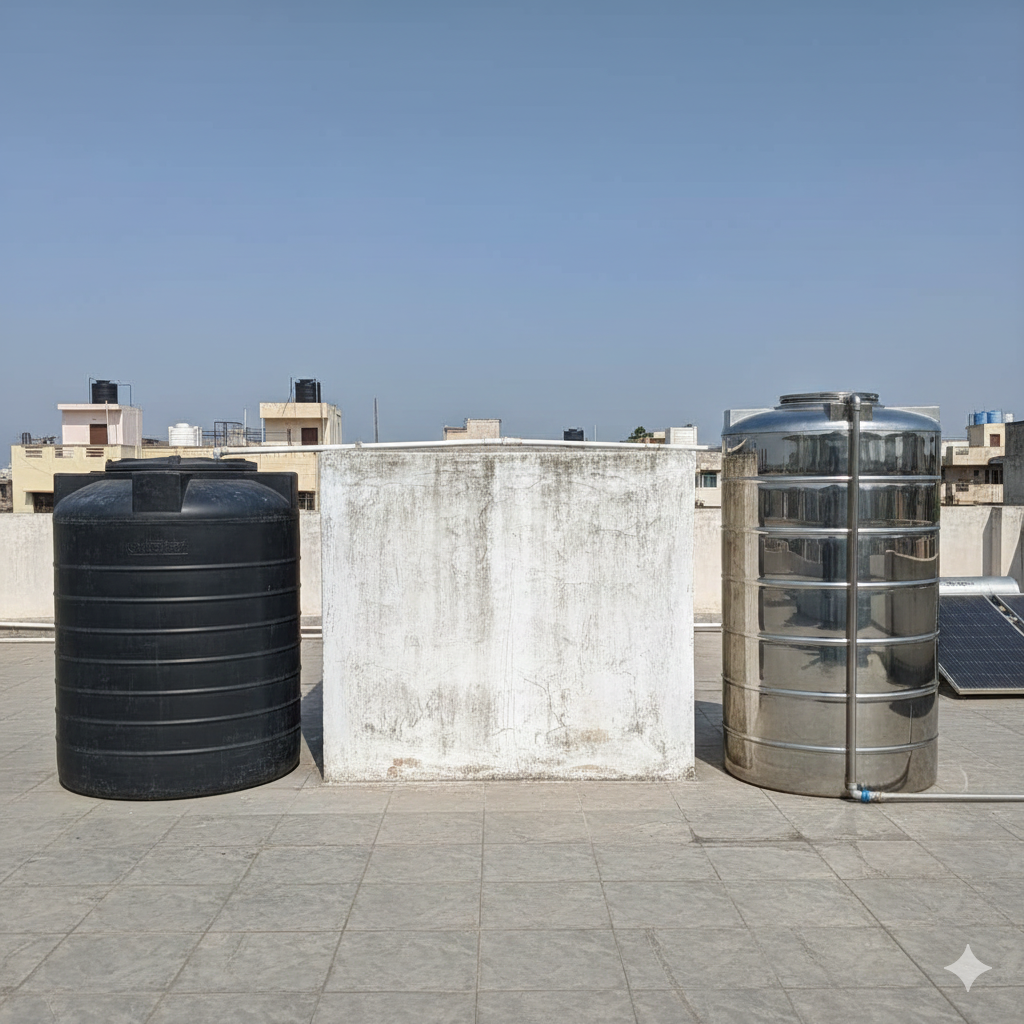
Which Is Best water tank in India?
When people plan to buy a best water tank, the first confusion is not the size — it’s the material.
Plastic, concrete, or stainless steel — every seller claims their option is “the best.”
But in real Indian conditions — heat, dust, water cuts, rooftops, and budget limits — not every tank makes sense.
This blog will honestly compare plastic vs concrete vs stainless steel water tanks, explain real-life pros and cons, and help you choose the most practical water tank for Indian homes in 2025.
Why Water Tank Material Matters More Than You Think
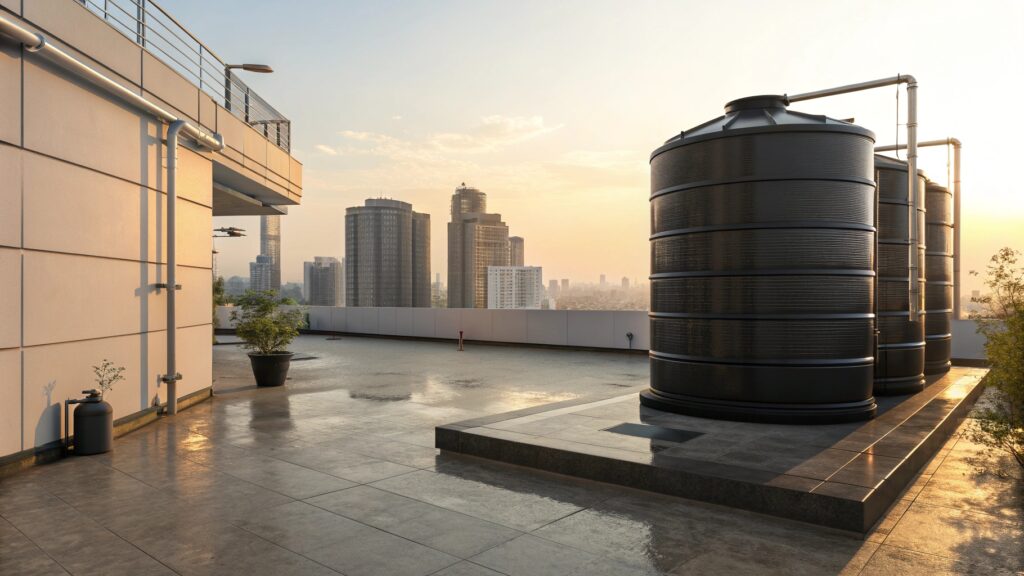
Your water tank affects:
-
Water quality
-
Maintenance cost
-
Lifespan
-
Roof safety
-
Daily convenience
A wrong choice can mean:
-
Cracks and leakage
-
Rusted water
-
Algae growth
-
High repair cost
So let’s break it down properly.
1. Plastic Water Tanks (Most Practical Choice in India)
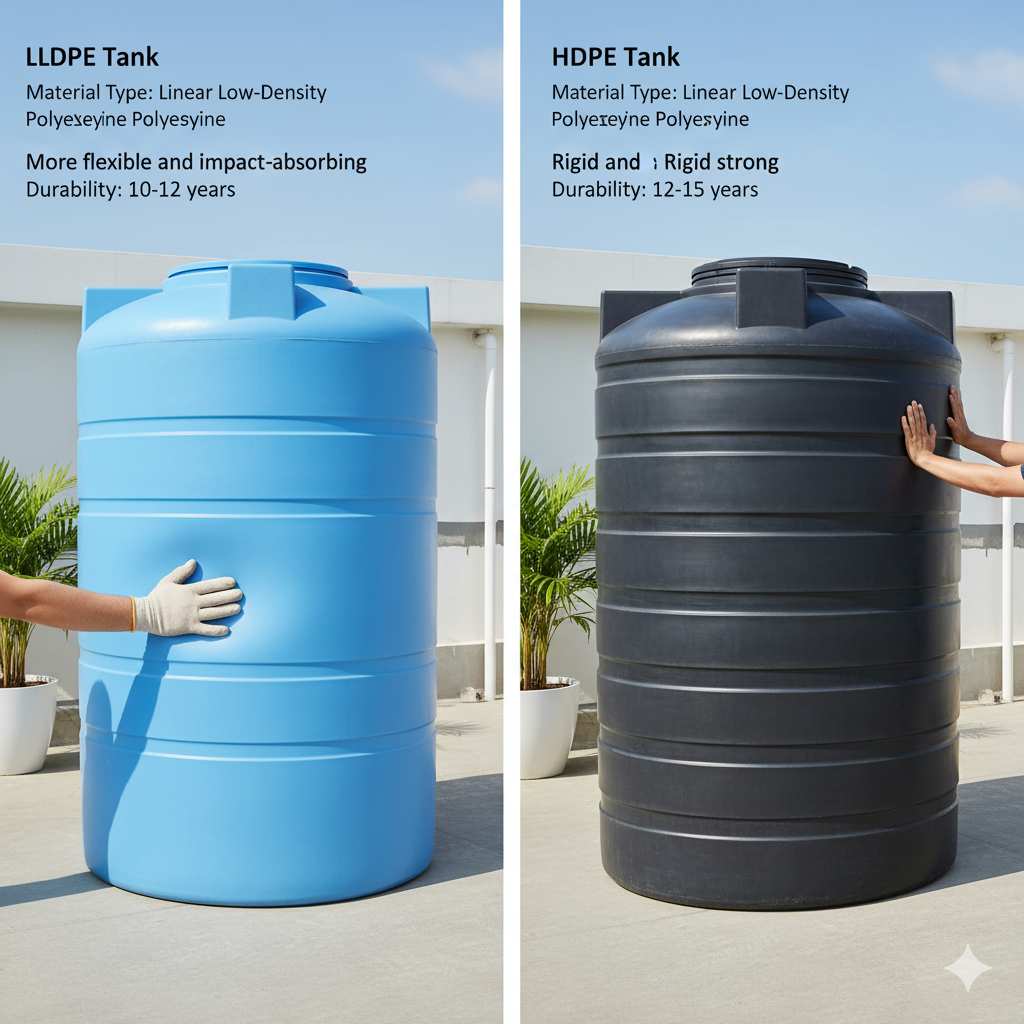
Plastic water tanks (mainly HDPE / LLDPE) are the most widely used tanks in India — and there are solid reasons for that.
Advantages of Plastic Water Tanks
Lightweight → safe for rooftops
No rust, no corrosion
UV-stabilized (black tanks block sunlight)
Easy to install and shift
Affordable price range
Available in many sizes (500L–5000L+)
Modern plastic tanks are:
Food-grade
Multi-layered
Designed for extreme Indian summers
Disadvantages (Being Honest)
Very cheap plastic tanks may deform
Needs cleaning every 6 months
Low-quality brands may fade or weaken
For 90% Indian homes, plastic tanks are the best balance of cost, durability, and safety.
2. Concrete Water Tanks (Old-School but Problematic)
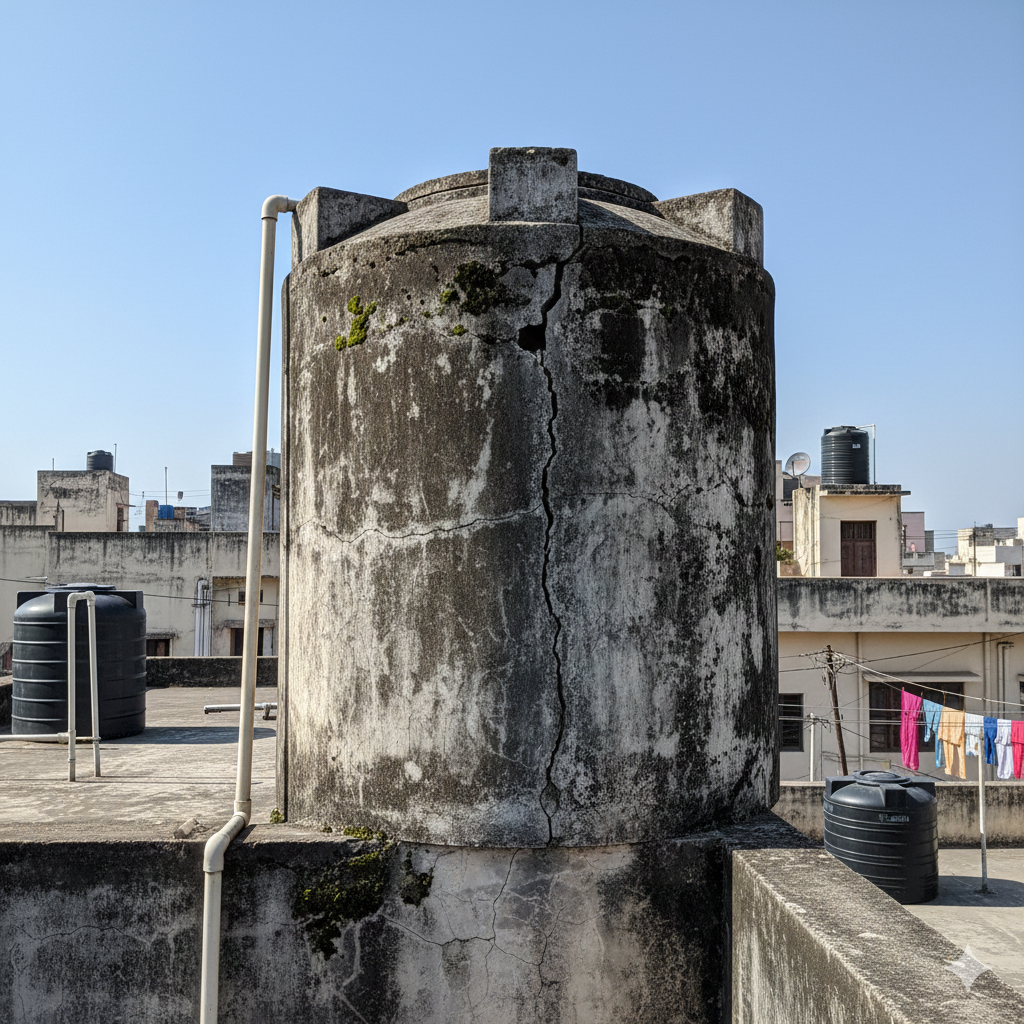
Concrete tanks are usually built on-site, common in old houses and apartments.
Advantages of Concrete Tanks
Very strong structure
Suitable for underground storage
Large capacity possible
Major Disadvantages
Cracks develop over time
Leakage is hard to detect
Cleaning is difficult
Algae and bacteria grow easily
Heavy load on structure
Repairs are costly and messy
Water stored in concrete tanks often:
Absorbs cement smell
Becomes dirty if not maintained
Concrete tanks are not ideal for modern homes, especially rooftops.
3. Stainless Steel Water Tanks (Premium but Impractical)
Stainless steel tanks look premium and are often used in commercial kitchens or hospitals.
Advantages of Stainless Steel Tanks
Hygienic surface
No algae sticking easily
Long life if maintained
Serious Drawbacks in Indian Homes
Very expensive
Heats water quickly in summer
High maintenance
Can corrode if steel quality is poor
Limited size options
Not rooftop-friendly due to weight + heat
Good for special use cases, not practical for normal households.
Why LLDPE Tanks Are Perfect for Homes
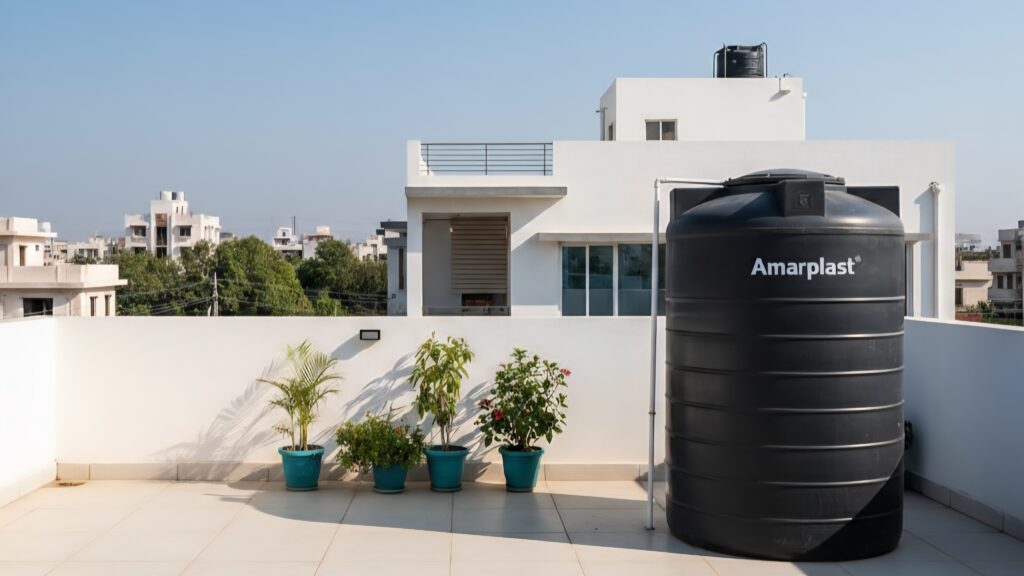
| Feature | Plastic | Concrete | Stainless Steel |
|---|---|---|---|
| Cost | Low | Medium | Very High |
| Weight | Light | Very Heavy | Heavy |
| Rust/Corrosion | No | No | Yes (possible) |
| Heat Resistance | High | Medium | Low |
| Maintenance | Low | High | High |
| Installation | Easy | Complex | Moderate |
| Best for Homes | Yes | No | Limited |
Why Plastic Water Tanks Make Most Sense in India (2025)

Indian conditions demand:
Heat resistance
Budget control
Easy installation
Long life
Plastic tanks check all boxes:
Multi-layer insulation keeps water cooler
No structural risk to rooftops
Easy replacement after many years
Affordable for all family sizes
This is why builders, plumbers, and homeowners trust plastic tanks the most.
Which Water Tank Should YOU Choose?
Choose Plastic If:
-
Residential home
-
Rooftop installation
-
Budget-friendly requirement
-
Long-term peace of mind
Choose Concrete If:
-
Underground storage only
-
Large housing society
Choose Stainless Steel If:
-
Commercial or medical use
-
Indoor installation
FAQ
Q1. Which water tank is best for Indian homes? Plastic water tanks are best due to heat resistance, low cost, and easy maintenance.
Q2. Is stainless steel tank better than plastic? Only for special uses. For homes, plastic performs better.
Q3. Do plastic tanks affect water quality? No, if the tank is food-grade and cleaned regularly.
Q4. How long do plastic water tanks last? 10–20 years with proper care.
Q5. Are concrete tanks outdated? Yes, for rooftop use they are no longer practical.