
Table of Contents
10 Common Water Tank Problems and How to Avoid Them (2025 Guide)
Water tanks are meant to store clean, safe water.
But in many Indian homes, tanks become a source of problems — leakage, smell, algae, cracking, and even health issues.
The good news?
Most water tank problems are avoidable if you understand the cause early.
This guide explains the 10 most common water tank problems and simple ways to prevent them, especially in Indian conditions.
Why Water Tank Problems Happen So Often in India
Indian conditions are harsh:
-
Extreme heat
-
Dust & pollution
-
Irregular water supply
-
Poor installation
Most problems don’t appear suddenly — they build slowly due to neglect or wrong tank choice
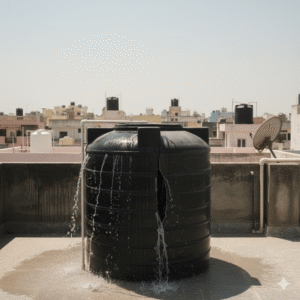
Water Tank Leakage
Why it happens:
Low-quality material
Poor base support
Aging tank
Cracks due to heat stress
How to avoid it:
Buy high-quality plastic water tanks
Ensure flat, strong base
Avoid dragging tank during installation
Replace very old tanks (10–15+ years)
Plastic tanks leak less because they flex slightly instead of cracking.
Algae Growth Inside Water Tank
Why it happens:
Sunlight entering tank
Infrequent cleaning
Transparent or light-colored tanks
How to avoid it:
Use black, UV-stabilized plastic tanks
Clean tank every 6 months
Keep lid tightly closed
Sunlight + water = algae. Blocking light solves most of it.
Bad Smell from Water Tank
Why it happens:
Bacterial growth
Dead insects or debris
Long-stored stagnant water
How to avoid it:
Regular cleaning
Proper inlet filter
Drain and refill periodically
Plastic tanks with smooth inner surfaces reduce bacterial sticking.
Cracking of Water Tank
Why it happens:
Extreme temperature changes
Cheap plastic or poor concrete quality
Uneven support
How to avoid it:
Avoid very cheap tanks
Use multi-layer plastic tanks
Proper base leveling
Concrete tanks crack the most over time.
Water Contamination
Why it happens:
Rust (steel tanks)
Algae & bacteria
Open lids
How to avoid it:
Choose food-grade plastic tanks
Keep lid sealed
Clean regularly
Material choice directly affects water safety.
Color Fading of Water Tank
Why it happens:
Constant sun exposure
Poor UV protection
How to avoid it:
Buy UV-stabilized tanks
Avoid very cheap brands
Color fading is not just cosmetic — it signals weakening plastic.
Low Water Pressure from Tank
Why it happens:
Low tank height
Pipe blockage
Wrong pipe size
How to avoid it:
Install tank at proper height
Clean pipelines
Use correct pipe diameter
Tank size does not control pressure — height does.
Short Lifespan of Water Tank
Why it happens:
Low-grade material
Poor maintenance
Constant heat stress
How to avoid it:
Choose trusted plastic water tanks
Clean regularly
Ensure proper installation
Good plastic tanks last 10–20 years.
Short Lifespan of Water Tank
Why it happens:
No overflow pipe
Faulty float valve
How to avoid it:
Install overflow pipe
Use good quality float valve
Periodic inspection
This saves water and prevents wall damage.
Q1. How often should a water tank be cleaned?
Every 6 months is ideal.
Q2. Why does my water tank smell?
Due to bacteria, algae, or stagnant water.
Q3. Which tank has least problems?
Good quality plastic water tanks.
Q4. Is algae harmful?
Yes, it affects water quality and health.
Q5. When should I replace my water tank?
After 10–15 years or if cracks appear.
You can read our blog on why black tank last long